
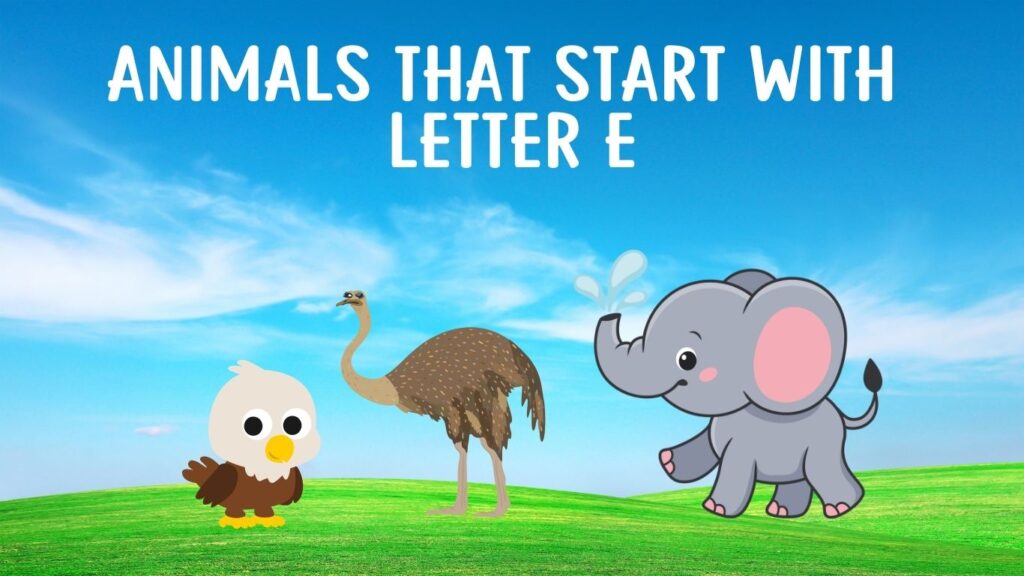
An Enchanting Exploration of Animals Beginning with ‘E’
The natural world is a source of endless fascination, and the simple act of exploring it through the letters of the alphabet can reveal an astonishing array of creatures. Among these, the letter ‘e’ introduces us to a captivating collection of animals, ranging from the familiar giants that roam vast landscapes to the more elusive inhabitants of our oceans and forests. This report embarks on an expedition to uncover the intriguing characteristics and fascinating facts about these ‘e’ animals, satisfying the inherent human curiosity about the diverse tapestry of life on Earth.
Our journey begins with a comprehensive look at the sheer variety of animals whose names start with ‘e’.
This seemingly simple categorization unveils a remarkable spectrum of life, demonstrating the breadth of biodiversity even within a single letter. From well-known species that are part of our everyday understanding of the animal kingdom to lesser-known creatures that inhabit specific niches, the list is a testament to the incredible diversity of life on our planet.
Furthermore, the varying levels of familiarity readers might have with these animals present a unique opportunity. While reinforcing existing knowledge about common species, we can also introduce the equally fascinating world of those creatures that might be new acquaintances, broadening our appreciation for the richness of the natural world.
A Catalog of Creatures Commencing with ‘E’: The ‘E’ Animal Compendium
The following list represents a compilation of distinct animal names starting with the letter ‘e’ found within a variety of resources.
Eagle
Earwig
Eastern Bluebird
Eastern Box Turtle
Eastern Brown Snake
Eastern Coral Snake
Eastern Dwarf Treefrog
Eastern Gray Squirrel
Eastern Grey Kangaroo
Eastern Gorilla
Eastern Mole
Echidna
Echinoderm
Ecuador Poison Frog
Edible Crab
Edible Frog
Eel
Eelgrass Limpet
Egret
Eider
‘Elepaio
Eland
Electric Eel
Electric Ray
Eleonora’s Falcon
Elephant
Elephant Seal
Elephant Shrew
Elf Owl
Elk
Emperor Angelfish
Emperor Dragonfly
Emperor Goose
Emperor Newt
Emperor Penguin
Emu
Enfield (Mythical)
English Bulldog
English Shepherd
Ermine
Erymanthian Boar (Mythical)
Escolar
Eskimo Dog
Española Giant Tortoise
Estrela Mountain Dog
Ethiopian Mountain Adder
Ethiopian Wolf
Etruscan Shrew
Eulachon
Euro
Eurasian Beaver
Eurasian Eagle-Owl
Eurasian Jay
Eurasian Lynx
Eurasian Magpie
Eurasian Red Squirrel
Eurasian Wolf
European Common Frog
European Edible Dormouse
European Goldfinch
European Grass Snake
European Hare
European Hedgehog
European Mink
European Pond Turtle
European Robin
European Sea Sturgeon
European Tree
Eurasian Curlew
Egyptian Fruit Bat
Egyptian Mau Cat
Egyptian Vulture
Emerald Cockroach Wasp
Eyed Click Beetle
Eagle: Majestic birds of prey with sharp talons and exceptional eyesight, symbolizing freedom and strength. Found globally (except Antarctica), they are apex predators with over 70 species. They can dive at speeds up to 100 mph.
Earwig: Insects with long, flat bodies and pincers, found worldwide except Antarctica. Their pincers are used for defense, hunting, and courtship. Despite a common myth, they don’t habitually enter ears.
Eastern Bluebird: Small birds with blue upper parts and rusty throats, found in open woodlands. Males are brightly colored and defend their territories. They are considered a symbol of happiness.
Eastern Box Turtle: Reptiles with domed, patterned shells, native to the eastern US. They can fully retract into their shells for protection and have an omnivorous diet.
Eastern Brown Snake: Highly venomous snakes from Australia and New Guinea. Their color varies, and they are responsible for many snake-bite deaths in Australia.
Eastern Coral Snake: Venomous snakes in the southeastern US with distinctive red, black, and yellow rings. The pattern helps distinguish them from non-venomous mimics.
Eastern Dwarf Treefrog: Small green frogs found in eastern Australia. Males have a distinctive two-part call.
Eastern Gray Squirrel: Common tree squirrels in eastern North America, introduced elsewhere. They hoard food and use their bushy tail for balance.
Eastern Grey Kangaroo: Large marsupials from Australia with powerful hind legs for leaping. They live in groups called mobs and can jump over 3 meters.
Eastern Gorilla: The largest living primates, found in African rainforests. Critically endangered due to hunting and habitat loss. Mountain gorillas have thicker hair than lowland gorillas.
Eastern Mole: North American mammals adapted for burrowing underground. They have fused eyelids and a sensitive snout.
Echidna: Unique mammals from Australia and New Guinea that lay eggs; also known as spiny anteaters. They have electroreceptors on their snouts and eat ants and termites.
Echinoderm: Marine animals like starfish and sea urchins. They can regenerate lost limbs.
Ecuador Poison Frog: Brightly colored, poisonous amphibians from Ecuador, Colombia, and Peru. Their colors warn predators of their toxicity. Males carry tadpoles on their backs.
Edible Crab: Large brown crabs found on UK shores, commercially important in Europe. Their shells have a pie-crust edge.
Edible Frog: Common European amphibians used in cuisine. They have smooth green bodies and loud mating calls.
Eel: Snake-like marine creatures found in fresh and saltwater. Some migrate long distances to breed; the European eel travels over 6,000 km.
Eelgrass Limpet: Extinct marine snails that lived on eelgrass in the western Atlantic. Their extinction was linked to the decline of eelgrass beds.
Egret: Graceful white birds with slender profiles, found near water. They hunt fish and amphibians. Their plumes were once prized for hats.
Eider: Sea ducks found in northern regions. They have dense down used to line nests and collected by humans.
‘Elepaio: Small monarch flycatchers endemic to Hawaii. The Oahu subspecies is endangered. Males have a distinctive shrill whistle.
Eland: Large antelopes native to African grasslands and savannas. They are the largest antelope species.
Electric Eel: Freshwater knifefish from South America that can produce strong electric shocks. They use this ability to hunt and defend themselves.
Electric Ray: Marine creatures capable of generating electric shocks for defense and hunting. They often bury themselves in the sand.
Eleonora’s Falcon: Migratory raptors found on Mediterranean coastlines in summer, wintering in Madagascar. They are fast fliers that hunt insects, birds, and bats mid-air.
Elephant: The largest land mammals, known for intelligence and strong social bonds. They have long trunks, large ears, and tusks. They can communicate over long distances using infrasound.
Elephant Seal: Massive marine mammals with large noses on males. Southern elephant seals can hold their breath for over two hours, diving deeper than any other seal.
Elephant Shrew: Small African mammals with long, trunk-like noses, more related to elephants than shrews. They form monogamous pairs and communicate via scent markings.
Elf Owl: The smallest owl in North America, found in arid southwestern regions. They nest in abandoned woodpecker holes.
Elk: Large members of the deer family with impressive antlers. Also known as wapiti, their antlers are shed and regrown annually. They have loud mating calls called bugles.
Emperor Angelfish: Vibrantly colored fish found in coral reefs of the Pacific and Indian Oceans. Adults have blue and yellow stripes and a dark mask. Juveniles look very different.
Emperor Dragonfly: Large dragonflies found near UK ponds and lakes in summer. Males are blue, females are green.
Emperor Goose: Stocky geese of northern Alaska and eastern Russia with silvery gray bodies and white heads. They fly low and mate for life.
Emperor Newt: Newts that live on land but breed in water during monsoon season. Females are larger than males.
Emperor Penguin: The largest penguin species, native to Antarctica. Males incubate eggs during the harsh winter. They are the deepest-diving birds.
Emu: The second-largest bird in the world, flightless and native to Australia. They have long legs and can run at high speeds. They have only three toes on each foot.
Enfield (Mythical): A heraldic creature with the head of a fox and wings of an eagle. It also has features of a greyhound, lion, and wolf.
English Bulldog: A domesticated dog breed known for being gregarious and friendly.
English Shepherd: A breed of working dog from America, originally bred for herding. They are intelligent and energetic.
Ermine: Small carnivorous mammals with white winter fur, also known as stoats. Their fur changes color with the seasons for camouflage.
Erymanthian Boar (Mythical): A wild boar from Greek mythology, known for its vast size. Heracles had to capture it as one of his twelve labors.
Escolar: Deep-sea fish also called Snake Mackerel. Eating their flesh can cause digestive issues.
Eskimo Dog: A fluffy white dog breed, also known as the American Eskimo dog, originating from the German spitz. They are active and good with children.
Española Giant Tortoise: A species of giant tortoise from the Galapagos Islands, known for their saddleback shells. Conservation efforts have helped their population recover.
Estrela Mountain Dog: An intelligent and independent dog breed from Portugal. They are loyal but need a strong-willed owner.
Ethiopian Mountain Adder: A venomous viper species found only in Ethiopia. Little is known about their natural history.
Ethiopian Wolf: An endangered member of the dog family found only in Ethiopia. They have a red-brown coat and hunt alone for small prey. Habitat loss is a major threat.
Etruscan Shrew: One of the smallest mammals, known for speed and high metabolism. They have a long snout and eat frequently.
Eulachon: Anadromous smelt fish found from California to Alaska, also known as candlefish. Their name means “rich fish of the Pacific”.
Euro: An arid-zone subspecies of the Common Wallaroo, a kangaroo-like marsupial with large ears. They have a distinctive dark shiny nose.
Eurasian Beaver: The largest rodent in Eurasia, known for building dams and creating ecosystems. They are a keystone species.
Eurasian Eagle-Owl: One of the largest owl species, found across Europe and Asia. They have distinctive ear tufts and orange eyes and are nocturnal predators.
Eurasian Jay: Colorful birds in the crow family, found throughout Europe and Asia. They eat acorns and other birds’ eggs.
Eurasian Lynx: Medium-sized wild cats with short tails and tufted ears, skilled hunters in snowy environments. Their large paws help them move through snow.
Eurasian Magpie: Intelligent birds in the crow family with glossy black and white plumage. They can recognize themselves in a mirror and use tools.
Eurasian Red Squirrel: Red-furred squirrels found in forests across Europe and Asia. Their population has declined in some areas due to introduced grey squirrels.
Eurasian Wolf: A large subspecies of the gray wolf found across Europe and North Asia. They live in packs with complex social structures and are apex predators.
European Common Frog: Mid-sized amphibians found throughout Europe and Asia, hatching from frogspawn. Their color can vary depending on their habitat.
European Edible Dormouse: Nocturnal mammals found in trees and buildings, larger than hazel dormice. They were historically eaten, giving them their name.
European Goldfinch: Small passerine birds with red faces and yellow wing stripes, native to Europe and Asia. They feed on small seeds using their pointed beaks.
European Grass Snake: Non-venomous snakes found throughout Europe and Asia, often near water. They mainly eat amphibians and have a yellow collar.
European Hare: Fast and agile mammals found across Europe and Asia. They can reach speeds of up to 45 mph and are primarily nocturnal.
European Hedgehog: Small nocturnal mammals with spiny coats, found across Europe. They curl into a ball for defense and are immune to snake venom.
European Mink: Medium-sized mustelids with long bodies and short legs. They have a thick, water-repellent undercoat.
European Pond Turtle: Turtles found in central and southern Europe, northern Africa, and central Asia. They are sun-loving and can live over 100 years.
European Robin: Small insectivorous birds with orange breasts, found across Europe and Asia. They are often seen in gardens and are associated with Christmas.
European Sea Sturgeon: A large, endangered fish.
European Tree Frog: Small green frogs found in southern Europe with a black stripe on their sides. They can change color and are excellent climbers.
Eurasian Curlew: The largest wading bird found in the UK, with a long, distinctive bill. Their population is declining.
Egyptian Fruit Bat: Bats with light-brown bodies and a two-foot wingspan, found in Africa and the Middle East. They are important pollinators and use echolocation.
Egyptian Mau Cat: A domestic cat breed believed to have originated in Egypt, known for its natural spots. They are the fastest domestic cat breed.
Egyptian Vulture: A white vulture with a yellow face, the only European vulture that migrates to Africa. They use tools to open eggs.
Emerald Cockroach Wasp: Solitary wasps that manipulate cockroaches as hosts for their larvae, found in tropical regions.
Eyed Click Beetle: Beetles found in eastern North American deciduous forests with prominent eyespots on their pronotum. The eyespots may deter predators.
Venturing into the Unusual: Exploring Less Common ‘E’ Animals
The world of animals that start with ‘e’ extends beyond the commonly recognized species.
The Eelgrass Limpet , now sadly extinct, once thrived on eelgrass beds in the western Atlantic, its fate intertwined with the health of its habitat.
The European Sea Sturgeon represents an ancient lineage of fish facing threats in modern waters. The haunting call of the Eurasian Curlew , a large wading bird of the UK, is becoming less frequent due to population decline.
The Egyptian Fruit Bat , with its impressive wingspan, plays a vital role in pollination in its African and Middle Eastern home.
The elegant Egyptian Mau Cat , revered in ancient Egypt, is known for its speed and distinctive spotted coat.
The Egyptian Vulture , a tool-using scavenger, highlights the diverse strategies for survival in the animal kingdom.
The bizarre behavior of the Emerald Cockroach Wasp showcases the intricate relationships between predator and prey.
The Eyed Click Beetle startles potential predators with its prominent markings.
The unique Española Giant Tortoise of the Galapagos Islands demonstrates the remarkable adaptations of island life.
The Estrela Mountain Dog embodies loyalty and independence.
The elusive Ethiopian Mountain Adder remains largely a mystery to science.
The European Mink is a semiaquatic predator with a luxurious coat.
The sun-loving European Pond Turtle can live for over a century.
Finally, the European Tree Frog showcases the remarkable ability of some amphibians to change color.
These lesser-known ‘e’ animals contribute significantly to the biodiversity of our planet, each with its own unique story and ecological role.
Mythical ‘E’s: Creatures of Legend and Lore
Beyond the realm of real animals, the letter ‘e’ also graces the names of fascinating mythical creatures.
The Enfield is a heraldic beast, a composite of various animals, often depicted with the head of a fox and the wings of an eagle. This fantastical creature also boasts the forelegs of an eagle, the chest of a greyhound, the body of a lion, and the hindquarters and tail of a wolf. It features prominently in heraldry, notably in the Coat of arms of the London Borough of Enfield.
Another captivating mythical ‘e’ is the Erymanthian Boar from Greek mythology. This creature was no ordinary pig; it was described as a “shaggy and wild” boar of immense size and power. Its capture was one of the legendary twelve labors of Heracles, highlighting its formidable nature in ancient tales.
These mythical ‘e’ animals demonstrate the enduring power of imagination and how real and imagined creatures alike can capture the human spirit.
Conclusion: An ‘E’xhaustive Exploration of the Animal Kingdom’s ‘E’s
Our exploration into the world of animals that begin with the letter ‘e’ has revealed a truly enchanting array of creatures. From the skies above to the depths of the oceans, and across diverse terrestrial landscapes, these animals showcase a remarkable spectrum of adaptations, behaviors, and ecological roles.
We have encountered familiar faces like the elephant and the eagle, and discovered the fascinating lives of less common animals such as the echidna and the earwig. Even the realm of mythology has contributed to our ‘e’-themed menagerie with the intriguing Enfield and the formidable Erymanthian Boar. The sheer diversity of life encompassed by this single letter underscores the incredible richness of the animal kingdom.
To provide a clearer picture of the variety of animal types encountered, the following table summarizes some examples from our ‘e’ animal expedition:
A Synopsis of ‘E’ Animals by Category
Mammal
Elephant, Elk, Emu, Ermine, Eurasian Lynx, European Hedgehog, Eland, Emperor Penguin, Elephant Seal, Elephant Shrew, Etruscan Shrew
Bird
Eagle, Egret, Eider, ‘Elepaio, Emperor Goose, Emperor Penguin, Emu, Eurasian Jay, Elf Owl, European Robin, European Goldfinch, Eastern Bluebird
Reptile
Eastern Box Turtle, Eastern Coral Snake, Eastern Brown Snake, Española Giant Tortoise, Ethiopian Mountain Adder, European Pond Turtle |
Fish
Eel, Electric Eel, Electric Ray, Escolar, Eulachon, Emperor Angelfish, European Sea Sturgeo
Insect
Earwig, Emperor Dragonfly, Emerald Cockroach Wasp, Eyed Click Beetle
Invertebrate
Earthworm, Eelgrass Limpet, Echinoderm, Edible Crab |
Amphibian
Edible Frog, Ecuador Poison Frog, Eastern Dwarf Treefrog, European Common Frog, European Tree Frog, Emperor Newt
Mythical
Enfield, Erymanthian Boar
This glimpse into the ‘e’ animals highlights the incredible biodiversity of our planet and the fascinating stories each creature holds. From the smallest shrew to the largest elephant, each plays a unique and vital role in the intricate web of life.