
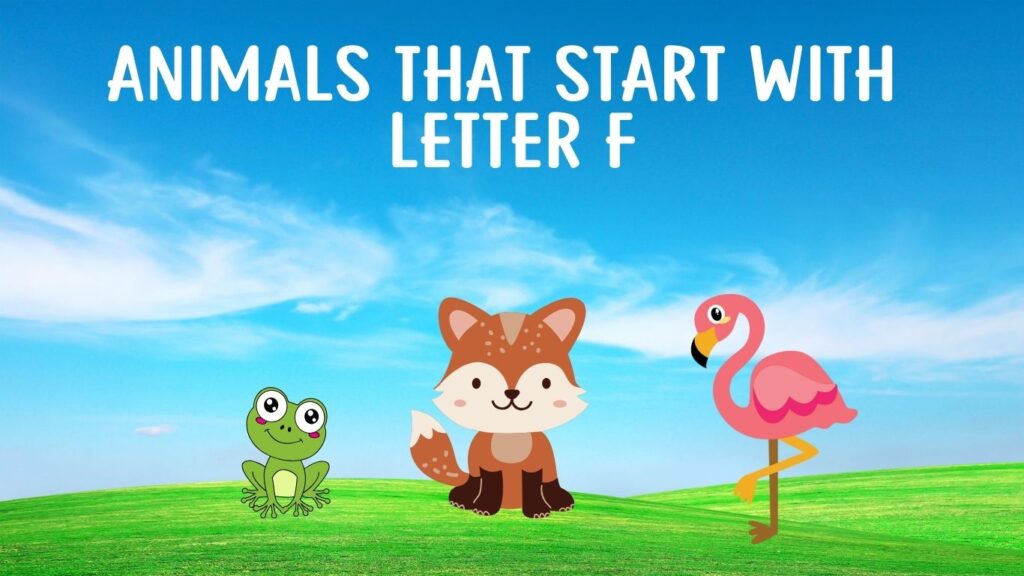
Fantastic Fauna: Exploring the World of Animals Starting with ‘F’
The natural world teems with an astonishing variety of life, each creature uniquely adapted to its environment and playing a role in the intricate web of ecosystems. From the smallest insects to the largest mammals, the diversity of the animal kingdom is a source of endless fascination. Even when we focus on a single letter of the alphabet, we can uncover a remarkable collection of animals, each with its own story to tell. This exploration will delve into the lives of at least ten animals whose names begin with the letter ‘f’, revealing intriguing facts that highlight the wonder and complexity of the natural world.
Fantastic ‘F’ Animals: A Compendium of Creatures
The following table presents a selection of animals whose common names start with the letter ‘f’, along with a brief, captivating fact about each:
| Animal Name | Interesting Fact |
|---|---|
| Fox | These clever mammals can communicate using a wide array of vocalizations, with some species capable of producing over 40 different sounds. |
| Ferret | Historically, these slender animals were used for hunting rabbits and rodents, a practice that gave rise to the phrase “ferret out”. |
| Flamingo | These iconic pink birds acquire their vibrant plumage from pigments present in the algae and brine shrimp that form their diet. |
| Frog | Uniquely, these amphibians use their eyeballs to help them swallow food by retracting them into the roof of their mouth. |
| Falcon | Renowned for their incredible speed, the peregrine falcon holds the record for the fastest animal on Earth, reaching speeds of up to 242 miles per hour during dives. |
| Fly | These ubiquitous insects possess taste receptors on their feet, allowing them to detect food simply by landing on it. |
| Finch | A delightful collective noun for a group of goldfinches is a “charm,” reflecting their often cheerful and social behavior. |
| Firefly | These fascinating beetles produce light with remarkable efficiency; nearly 100% of the energy they use is converted into light with very little heat. |
| Flatworm | These simple invertebrates have an extraordinary ability to regenerate; if cut into pieces, each piece can develop into a new, complete worm. |
| Flounder | During their development, one of the flounder’s eyes migrates to the other side of its head, resulting in both eyes being on the same side in adulthood. |
The sheer number of animals whose names begin with a single letter underscores the vastness of life on our planet. Scientists continually work to classify and categorize this immense biodiversity, revealing the intricate relationships between different species. Furthermore, the fact that information about these animals comes from diverse sources, ranging from educational websites to scientific publications , indicates a widespread curiosity about the natural world that spans various audiences and purposes.
Spotlight on the ‘F’ List: Unveiling More About These Fascinating Fauna
Let us now delve deeper into the lives of two captivating members of our ‘f’ list: the adaptable fox and the colorful flamingo.
The Adaptable Fox
The fox, a creature often associated with cunning and intelligence, has successfully colonized nearly every corner of the globe, excluding only Antarctica. This remarkable distribution speaks to its ability to adapt to a wide range of habitats, from dense forests and arid deserts to grasslands and even urban environments. Different species of foxes have evolved unique characteristics to thrive in their specific homes. For instance, the fennec fox, native to the deserts of North Africa, possesses exceptionally large ears that help dissipate heat and aid in locating prey beneath the sand. In contrast, the red fox, found in colder regions, boasts a thick, insulating coat and may even burrow into snow for warmth. This ability to flourish in diverse conditions underscores the power of natural selection in shaping physical traits that enhance survival.
Foxes are skilled hunters, employing their keen senses of hearing and smell to locate prey. Their diet is remarkably varied, classifying them as omnivores. While they primarily feed on small mammals like rodents and rabbits, they also consume birds, insects, and even fruits. In urban settings, some foxes have adapted to scavenging from human food waste, demonstrating their resourcefulness in navigating human-altered landscapes. While often solitary hunters, foxes can also exhibit social behavior, living in family groups, particularly during the breeding season. Interestingly, groups of foxes have several collective nouns, including “skulk” and “leash”. This variety in social structure and diet highlights the behavioral flexibility that has contributed to their widespread success.
The Colorful Flamingo
The flamingo, with its striking pink plumage and elegant posture, is an unmistakable bird found in various wetland habitats across the Americas and Afro-Eurasia. There are six distinct species of flamingo, each adapted to slightly different ecological niches. While their vibrant color makes them stand out, these birds are not born pink. Their characteristic hue is a direct result of their diet, which consists primarily of algae and brine shrimp rich in carotenoid pigments. These pigments are absorbed by the flamingo and deposited in their feathers as they grow. The intensity of their pink coloration can even serve as an indicator of health and access to food, making brighter flamingos more attractive to potential mates. This direct link between diet and physical appearance illustrates how an animal’s environment can profoundly influence its traits.
Flamingos are well-adapted to their often harsh environments, which can include highly alkaline or saline lakes. They possess a unique filter-feeding mechanism to extract food from the water. They typically feed with their heads held upside down, using their specialized bills which have comb-like plates along the edges to strain out small food particles while allowing water to escape. These social birds often gather in large flocks, sometimes numbering in the thousands. These gatherings, fittingly called a “flamboyance,” provide safety in numbers and facilitate foraging. Sadly, despite their beauty and adaptability, some flamingo species, such as the Andean flamingo, are facing conservation challenges due to habitat loss and the impacts of climate change. This underscores the vulnerability of even seemingly abundant wildlife to environmental changes caused by human activities.
Conclusion: A Flourish of Animals that start with F
Our exploration into the world of animals starting with the letter ‘f’ has revealed a fascinating array of creatures, each with unique adaptations and intriguing behaviors. From the cunning fox to the vibrant flamingo, the diversity within this single letter highlights the incredible richness of the animal kingdom. We have encountered mammals, birds, insects, invertebrates, and fish, each playing a vital role in the ecosystems they inhabit. The interesting facts we have uncovered, such as the fox’s vocal range, the flamingo’s dietary coloration, and the flounder’s migrating eye, showcase the remarkable ways in which animals have evolved to survive and thrive in their respective environments. This glimpse into the ‘f’ fauna serves as a reminder of the endless wonders of the natural world and encourages us to continue learning about and appreciating the incredible biodiversity that surrounds us.